


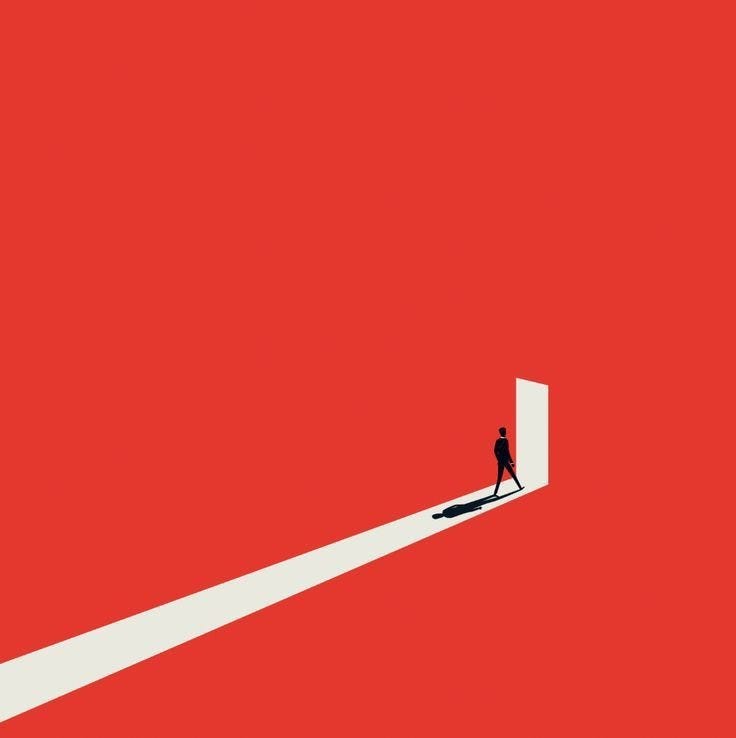
“We fear ugly, so we never start. We fear that it will never get better. We see no promise that our truly rough first attempts might become the thing we hoped for, the thing that we feel pressured to make perfect. We’re scared others will see us and judge us; that our ugly first efforts will reflect back upon us.”
This is a quote from David duChemin’s “Start Ugly” - a fantastic read I just completed on the perpetual challenge of creating.
duChemin ostensibly approaches his topic through the lens of the creator - the artist - who is continually challenged by the prospect of the thing being made ending up “ugly”.
And, so, his thesis is, summarily, that if we can just agree to “start ugly” - meaning, accept from the get-go that this thing we are making may simply not end up how we so desire - then it gets easier to start.
And this is important because, as duChemin puts it: “the beginnings […] are the most important part of the creative process.”
Reading duChemin, I was taken back to another book that I adored when I read it. Ichiro Kishimi & Fumitake Koga’s, “The Courage to Be Disliked”.
Based on the work of Alfred Adler (who we’ll get to later), Kishimi and Fumitake take on the same challenge as duChemin - the challenge of not starting because, to fail would essentially mean to be disapproved of.
Or, in Adlerian terms, to be inferior to the prototype to which we aspire.
For instance, take this parable from Kishimi and Koga:
“I have a young friend who dreams of becoming a novelist, but he never seems to be able to complete his work. According to him, his job keeps him too busy, and he can never find enough time to write novels, and that’s why he can’t complete work and enter it for writing awards. But is that the real reason? No! It’s actually that he wants to leave the possibility of ‘I can do it if I try’ open, by not committing to anything. He doesn’t want to expose his work to criticism, and he certainly doesn’t want to face the reality that he might produce an inferior piece of writing and face rejection.
He wants to live inside that realm of possibilities, where he can say that he could do it if he only had the time, or that he could write if he just had the proper environment, and that he really does have the talent for it. In another five or ten years, he will probably start using other excuses like ‘I’m not young anymore’ or ‘I’ve got a family to think about now.’
He should just enter his writing for an award, and if he gets rejected, so be it. If he did, he might grow, or discover that he should pursue something different. Either way, he would be able to move on. That is what changing your current lifestyle is about. He won’t get anywhere by not submitting anything.”
What’s this guy’s issue? Would it be so bad to write something that was not necessarily liked, or approved of, or widely accepted?
Yes. Yes it would.
That is exactly the point. From the outside, we can easily say to someone, “Look, your life won’t fall apart. The sky won’t fall. It’s OK to fail.”
But, when we’re in it, we lose that sense of objectivity. Because, the sense of fear that we feel in the face of the prospect of failure, or being disliked, or not meeting our own (or others’) expectations of our potential, can be (and often is) completely overwhelming.
And, so - like the author Kishimi & Koga cite above - we just stay stuck.
Now, this is not for lack of ability. Most of us know that, even when it comes to the challenges or changes which seem the most out of reach, that is not a comment on whether we are actually able to make that change or meet that challenge. (If you're not yet sure the change is even yours to make, these are the six signs you've already outgrown the career you're in.)
So what keeps us stuck then?
Fear.
I see this all the time with people I work with. I see it with myself too. Here are some examples:
The fear that my idea might not work out as well as I hope if executed.
The fear that a client’s desired career path will not only not work out, but that that failure will result in embarrassment and shame (compounded fears).
The professional who fears failing in his career, and so, always overworks — the logic of pushing through, right up until the pushing itself becomes the thing that takes him out of commission.
The bright child that always fears that she might not gain the highest grade in exams, and so, hesitates to do her best work and, as a result, doesn’t succed.
duChemin spends considerable time addressing fear, and concludes as follows: “…the best antidote to an all-consuming fear of failure is the repeated experience of failure itself […] the more we fail, the less we fear that it will harm us.”
So, to recap, we need to be unafraid to fail, and the antidote to the fear of failure is…to fail?
This begs an interesting question - what do we need to do or be in order to be willing to fail?
According to Adler: “If people are courageous and suffer defeat they are not hurt so much, but shy [read: less than courageous] people tend to make their escape to the useless side of life as soon as they see difficulties ahead.” (Adler)
Aha. So, we need courage to fail willingly.
And, what is courage? duChemin defines it in two distinct ways, and in both cases, by telling us what it is not:
“Courage isn’t the absence of fear. It’s not the feeling of bravery. It’s turning to that part of us that is screaming, ‘What if this is a horrible failure?’ and saying, ‘I have no idea, but let’s find out.’”
“Courage isn’t something some of us have and some do not. Courage is a choice to listen to the fear and to act in hopes of proving it wrong, and it is available to all of us, though ‘available’ has never meant ‘easy.’ For most of us, it doesn’t look like the stuff for which we win medals. For some, it’s just getting out of bed or writing the first lines of the new novel. For others, it’s sending the email or pressing publish on a blog post.”
So, this is all great - but what do you do with this discovery?
Turning back to Adler - if we think of what we fear (and avoiding what we fear) as actually serving a goal (i.e. the young novelist isn’t blocked by fear; his not-writing is for something), then fear becomes something else - a signal as to direction. If fear takes you towards an end that does not serve you, then acting counter to the fear (i.e. doing the thing you are afraid of) opens a doorway into what you actually need to do to get where you want to go. In Adler’s words: “The road that seems the most difficult is in fact the most direct.”
So, here’s the invitation:
Take five minutes. Now. Write down a list of things you’ve been avoiding - things that you aren’t necessarily afraid of doing (although, those would work too), but rather, actions as to the outcomes of which you are uncertain and, perhaps, are scared of not ending up as you’d most hope.
It could be that social media post you wanted to write.
It could be approaching that potential client for lunch.
It could be turning down work that you know won’t help you build your business.
Whatever is on that list - pick one. And do it. See what changes, what becomes possible and how your relationship to fear - and courage - shifts in that choice to act.
And, if you want, tell me about it.
P.S. Starting in September, the Pursuers of More is going to be exploring the courage it takes to navigate your next challenge when you’ve checked off all the boxes and are wondering “Now what?” There are 2 spots left. Sign up here.
Jordan Nahmias is the founder of Unstuck Consulting, an executive coaching practice for lawyers and other professionals. A former entertainment law partner in Toronto, he helps high performers navigate burnout, career transition, and identity.

→ Take the Beyond Success Assessment.
→ Or if you’d rather just talk - book a call.