


There’s a phrase that I am very familiar with:
“I could do it if I tried.”
And, while it often sounds like confidence, it’s really a very fancy way of staying stuck.
Imagine you are rock climbing. You are staring up a sheer face and thinking: “
Man - that’s really high.”
And, then - you don’t climb. You might think, “I could do it if I really tried, but…no need for that now.”
And, there’s no shame in that. It’s just a nothing burger - a non-event.
And, I think, that’s the issue with it.
Because, enough nothing-burgers add up and you start to notice.
The same thing happens with careers, and it usually arrives in one of three outfits:
It’s not worth the effort. Where I am isn’t that bad. I’m afraid of what it would take.
Notice what none of them say: not one of them is “I can’t”.
Rather, it’s “I won’t”.
And, when we phrase it that way, we realize that we are actually putting effort into - trying - something very different.
But, what is “trying” anyway?
To me, the first obvious answer is cost.
In the case of a career change: Four more years of school. A pay cut. Starting at the bottom of a ladder you already climbed before.
This is real, but is this “it”?
You have done harder things, certainly, and for worse reasons. So, if cost were the only obstacle, you could get over that realy easily.
The next answer then, might be, fear of failure.
But, are people really afraid of failing? Or, rather, is it failing in front of the people who know them?
Kishimi and Koga make this argument in The Courage to Be Disliked - that nearly all of our suffering is relational, and that freedom has a price, which is the willingness to be thought less of.
In other words, being “disliked” is not a failure. It’s actually a sign that you are succeeding.
When I was leaving law, the time it took to change paths had little to do with logistics. I knew the numbers. I knew the next phase, as uncertain as it was, would be very psychologically taxing.
What kept me stuck most was: what will people think? Will they think I failed? That I couldn’t cut it?
But, in the end, here’s what happened. Nobody cared.
Most people were happy for me. Some might have worried a bit.
But not one person thought less of me. I have never once, in the years since, met the critic I spent so long negotiating with in my head.
Now, I’m not saying, “Go for it because nobody cares.” That way disaster lies.
What I am saying is that we need to be careful of confusing approval for belonging.
If I change - my title, my career, my identity - am I still accepted? Do my friends still respect me? Do people still take me seriously? Does my wife still love me?
That’s not vanity. That’s a fear of loss, and it’s a different fear than the one you think you have.
Which brings me to the only question I think is worth asking.
Not can I do it?
But, rather, “What do I need in order to really try?”
That question isn’t answered by motivation. It’s answered by things that are far simpler (in many ways): inventory; runway; the conversations you’ve been postponing; permission to be bad at something again after a decade of being “good”.
And while you can’t necessarily answer the question of, “Am I brave enough?”, you definitely you can answer the questions raised on that list.
I can’t tell you what’s on your list. Which is why you need to write it. And, when you do, notice - the change you have in mind stops being a referendum on your character and simply becomes a set of logistics.
And logistics, you can definitely do.
Two Announcements!
The Pursuers of More is launching September 10, 2026. A group of 8-10 like minded folks are going to spend the next six months together exploring the courage it takes to navigate your next challenge when you’ve checked off all the boxes and are wondering “Now what?”
There are 2 spots left. Sign up here.
And…
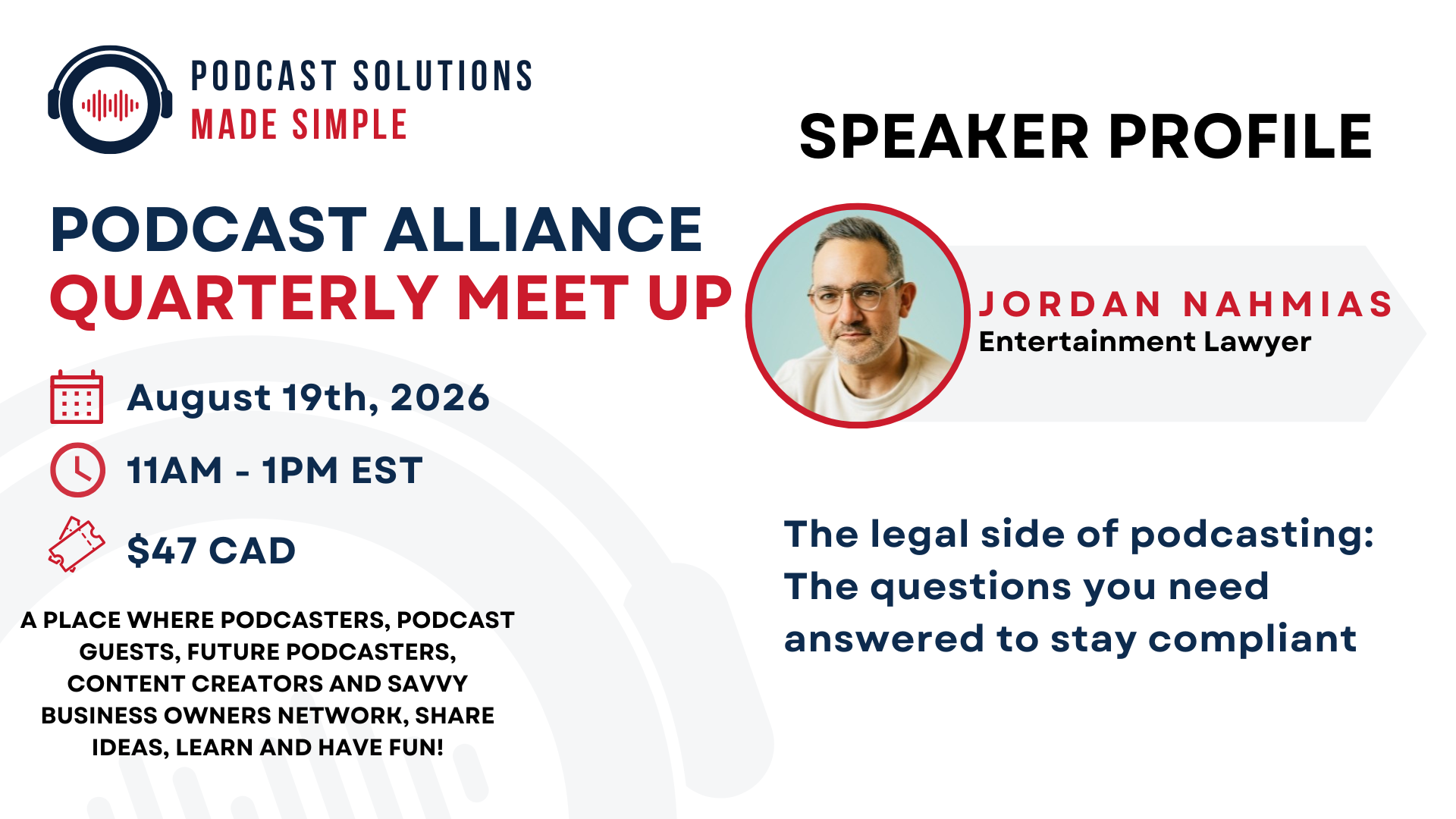
I’ll be speaking at the quarterly PodCast Alliance Meet Up.
Details below, and you can sign up here if you’re into that sort of thing:
https://e.sparxo.com/Podcast-Alliance-August2026
Jordan Nahmias is the founder of Unstuck Consulting, an executive coaching practice for lawyers and other professionals. A former entertainment law partner in Toronto, he helps high performers navigate burnout, career transition, and identity.

→ Take the Beyond Success Assessment.
→ Or if you’d rather just talk - book a call.
THIS!!!: "What kept me stuck most was: what will people think? Will they think I failed? That I couldn’t cut it?
But, in the end, here’s what happened. Nobody cared." How often do we navigate our lives based on what we think other's might think.